
*All events are 21+ valid ID required for entry*
8 PM – Doors
9 PM – Show
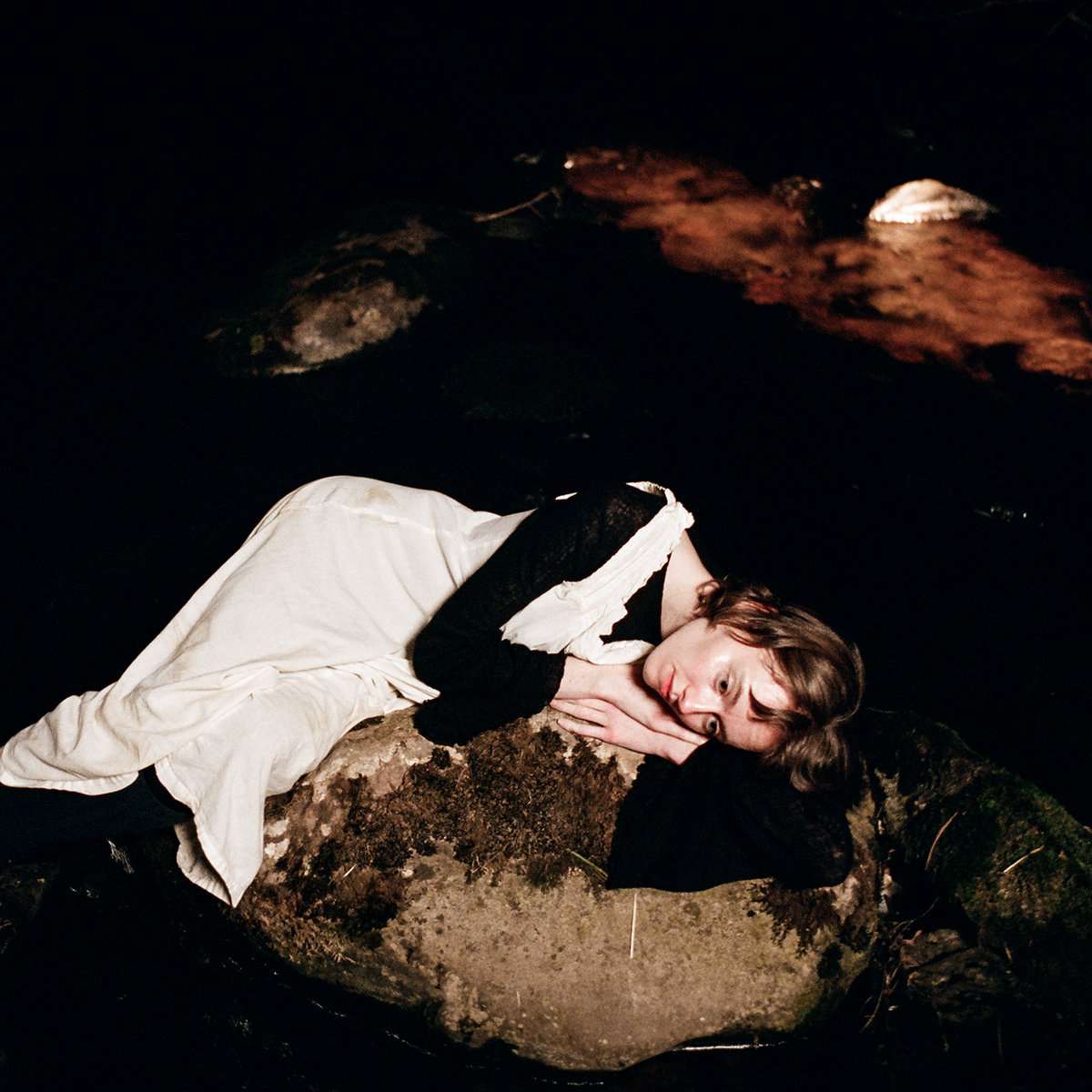
SKULLCRUSHER
And Your Song is Like a Circle, the second album from New York-based artist Skullcrusher, a.k.a. Helen Ballentine, winds its way into an everchanging, unstable core. Recorded piecemeal over a period of years following the release of her celebrated 2022 debut, Quiet the Room, And Your Song is Like a Circle does not capture experience – it gestures toward the imprint of an experience that is uncapturable. Swaying between vaporous folk and crystalline electronics, landing somewhere in the snowfields shared by Grouper and Julia Holter, Circle probes the ways that grief turns itself inside out. Loss itself becomes as real and substantial as what’s been lost.
Ballentine began writing Circle after leaving Los Angeles, a city she’d called home for nearly a decade. She ended up returning upstate to New York’s Hudson Valley, where she was born and raised. Several years of intense isolation followed, and Ballentine immersed herself in films, books, and art that reflected the rupture of relocating cross-country and its dissociative aftershocks.
Throughout the record, the line between human and machine blurs. On “Maelstrom,” voices crash between echoing drumbeats like water through a cavern. The vocal filigrees on “Exhale” fan out into a haze of synthesizers and strings. “Dragon” lets piano echo over tight, gritted percussion.
If Skullcrusher’s first album rendered the detailed intimacies of domestic space, Circle finds itself vaporized across the landscape: swirling, drifting, searching. It skirts an event horizon in long, slow strokes. These are songs that vibrate with the fervency of an attempt to capture a moment, to draw a circle around it. “I like thinking about my work as a collection,” Ballentine says. “Eventually it might form a circle. Each time I make something, I’m putting another line around the body of work. It feels like I’ll be trying to trace it for my whole life.”
h. pruz
Hannah Pruzinsky is no stranger to the transience of seeking refuge. Having grown up in a conservative enclave of eastern Pennsylvania, they inevitably became adept at finding secret creative outlets at a very early age. “My mom says I sang before I talked,” Pruzinsky says, succinctly characterizing an understanding that only a child could have – sometimes simple language is too constrained, too fallible, to be truly expressive. “It was something I rejected sharing with people for a long time, never singing in front of my parents or friends, refusing to sing in cars for a long time. Pretty paralyzed with anxiety and fear.”
Pruzinsky moved to New York at the age of eighteen, a place they consider to be “extremely important” to the continued refinement of the creative spirit that predated their full grasp of a properly structured sentence. The city’s pervasive atmosphere of sonder seeped through the thinly constructed protective walls of adolescence and perfectly suited their proclivity for private worlds. In a new life entirely their own, they had found a limitless place that they could reach and pull into themselves.